





Description
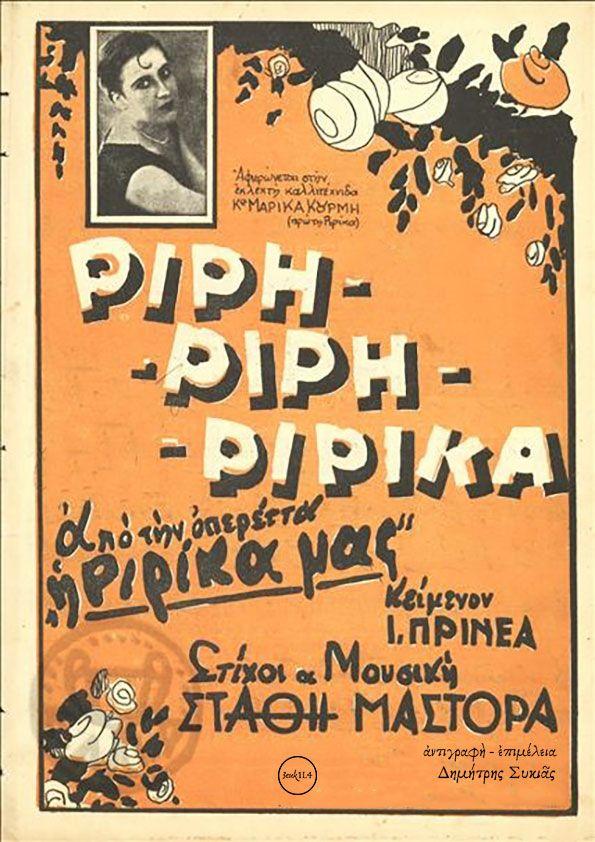
A contrafactum from Komotini based on the song “Ririka” from the operetta Our Ririka (1930), with lyrics by Giannis Prineas (1882–1963) and music by Stathis Mastoras (1893–1943).
This particular song was identified in the database of the Maale Adumim Institute under the title “La Kantiga Renombrada” and forms part of the audio archive of the Turkish-Israeli researcher and journalist Moshe Shaul (1929–2023). According to this database, the song is recorded as belonging to the tradition of Komotini, which may indicate either that it was written and sung there, or that Mari Abrevaya, who preserved it, originated from this city in Thrace.
This contrafactum appears to have been created after 1930, the year in which the operetta Our Ririka premiered. It is likely that the melody of the original song reached Komotini through a travelling theatre troupe before the Second World War. Until the 1950s, theatrical companies toured throughout Greece, contributing significantly to the dissemination of new musical repertories and sounds.
However, it is not possible to determine with certainty whether this contrafactum was indeed composed in Komotini or whether it was also sung in other regions. What can be established is that the adaptation was made in Greece and that the song belongs to the 20th century, as indicated by the clearly dated operetta. These elements are particularly significant, since it is rare to be able to determine with such precision both the** place** and the time of the creation of a traditional song. The Judeo-Spanish (Ladino) text constitutes a paraphrase of the original Greek lyrics.
Version 1
La kantiga de Ririka
Database of Maale Adumim, Catalogue number: 293 folkmasa.org/avshir/shirp.php?mishtane=293.
Performed by Mari Abrevaya
Alternative Title: La kantiga renombrada
Lyrics
La kantiga de Ririka /la kanˈtiɣa de ɾiˈɾika/ The Song of Ririka
Renombrada es /ɾenomˈbɾaða es/ is so popular
Yena de bives /ˈjena de ˈbiβes/ Full of liveliness
Y de enteres /i de enˈteɾes/ and of interest.
Los mansevos y los vyejos /los manˈseβos i los ˈvjeʒos/ The young and the old
Ke saven bivir /ke ˈsaβen biˈβiɾ/ who know how to live
La keren sintir /la ˈkeɾen sinˈtiɾ/ want to listen to her
Por se divertir /poɾ se diβeɾˈtiɾ/ in order to have fun.
En shena kuando kanta /en ˈʃena ˈkwando ˈkanta/ When she sings on stage
A todos los enkanta /a ˈtoðos los enˈkanta/ she enchants everyone.
Kon bezo atabafado /kon ˈbezo ataβaˈfaðo/ With her smothered kisses
Dize 'l esharopada /ˈdiʒe el eʃaɾoˈpaða/ she undresses.
Es poya enshundyada /es ˈpoja enʃunˈdjaða/ That plump little chick
Se la keren komer /se la ˈkeɾen koˈmeɾ/ that everyone wants to taste.
Ri, ri, ri, ri, Ririka /ɾi ɾi ɾi ɾi ɾiˈɾika/ Riri, Riri, Ririka,
Sos una djoya de grande valor /sos ˈuna ˈdʒoja de ˈɣɾande βaˈloɾ/ you are a delight and of great worth.
Ah el ken gosta de tus lavyos /a el ken ˈɣosta de tus ˈlaβjos/ Ah, the taste of your lips,
Una maskodjika /ˈuna maskoˈdʒika/ like a charming little mask,
No se l'olvida /no se lolˈβiða/ that remains unforgettable.
Ririka la dulsor /ɾiˈɾika la dulˈsoɾ/ Ririka, the sweetness.
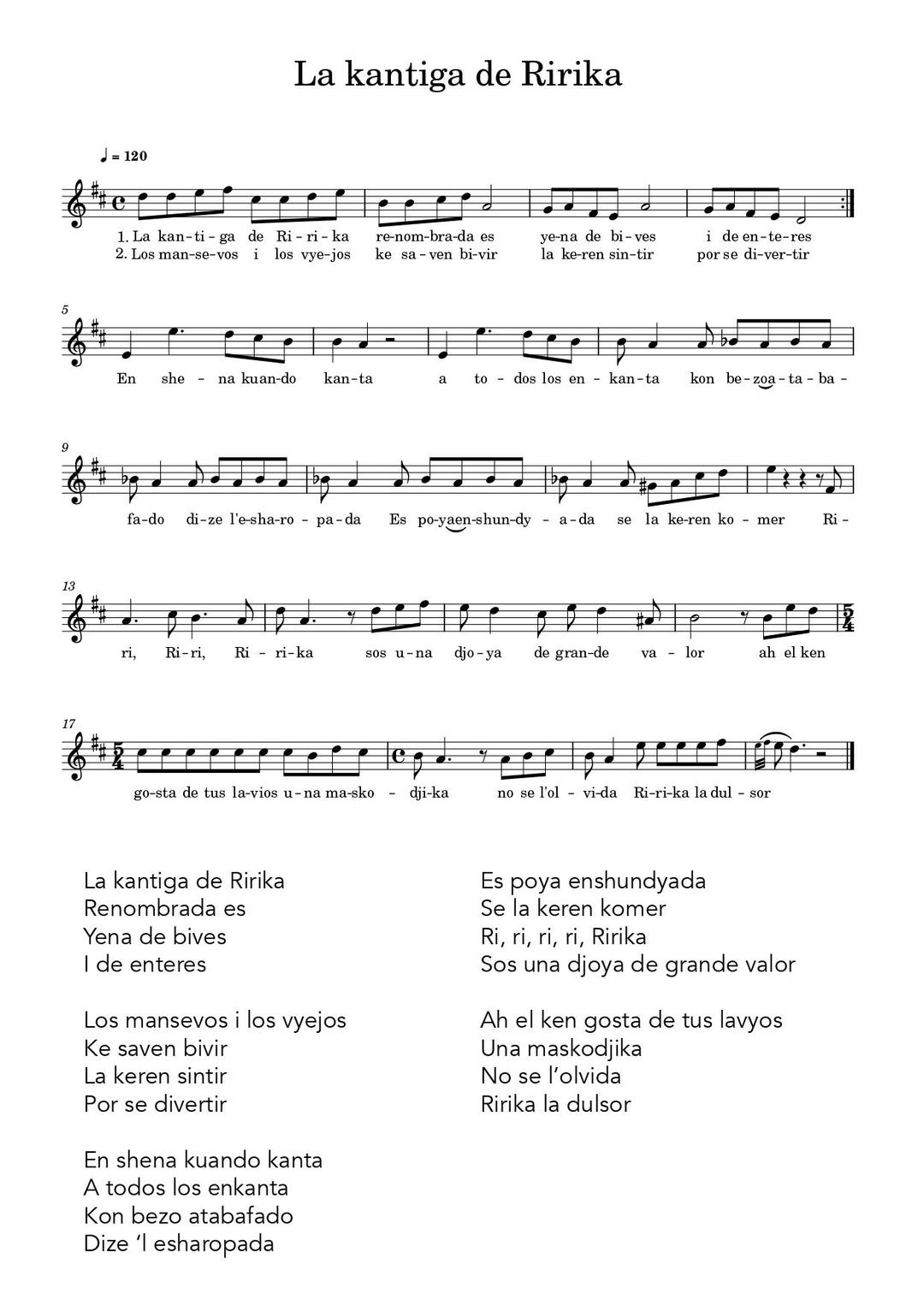
Music Guide

 Bibliography
El Trezoro de Kantes de Sefarad. El Instituto Maale Adumim para la documentación de la lengua judeo-española y su cultura, folkmasa.org.
“Η Ριρίκα μας (1930) – Greek National Opera.” www.nationalopera.gr, Greek National Opera, https://www.nationalopera.gr/arxeio/arxeio-parastaseon-pe/kalitexniki-periodos-2013-2014/item/581-h-ririka-mas-1930 Nehama, Joseph. Dictionnaire du Judéo-Espagnol. Madrid: Consejo superior de investigaciones cientificas, 1977.
**Research, analysis and translations: **Mariangela Chatzistamatiou Aural Transcriptions and Lead Sheets: Nikos Panagiotides
Disclaimer: The content on this website is protected by copyright. Use of the content is allowed for personal or educational purposes only with clear citation of the source. Republishing, modifying, or using the content for commercial purposes is prohibited without prior explicit permission.

