


A la una nasi yo
Alternative Title: A la una yo nasi, Las oras de la vida, Dime de donde vyenes
Description
This is a love song that appears in a wide range of sources from Thessaloniki, Rhodes, Egypt, Turkey, and Bulgaria. Each recording shows significant variation in the title, while multiple versions exist both in the lyrics and in the melody. Variations of this kind are a common phenomenon in oral tradition, and this particular song is no exception. Furthermore, it is worth noting that differences in word pronunciation can be observed among the various recordings. This aspect is particularly significant, since all the recordings examined in the present study come from Greek Jews, mainly from Thessaloniki. Therefore, one can only assume an even greater variety of pronunciations in the other Sephardic communities outside Greece. Here we present two recordings from the Flora Molho Archive, as well as additional sources.
Version 1
A la una nasi yo
Flora Molcho Archive Performed by Molcho’s father Isaak and her mother Rita (Rachel, née Matalon)
Alternative Title: A la una yo nasi, Las oras de la vida, Dime de donde vyenes
Lyrics
A la una nasi yo /a la ˈuna ˈnasi jo/ At one I was born,
a las dos me vaptizaron /a las dos me vaptiˈzaɾon/ at two they baptized me,
a las tres me despozaron [1] /a las tres me ðespoˈzaɾon/ at three they married me,
a las kuatro me kazi [2] /a las ˈkwatɾo me ˈkazi/ at four I joined in union.
me kazi kon mucho amor, alma y vida y korason /me ˈkazi kon ˈmutʃo aˈmoɾ/ I joined with great love, soul and life and heart.
Dimme ninya d’onde vyenes /ˈdimme ˈniɲa ðonde ˈvjenes/ Tell me, young girl, where do you come from,
ke te kero konoser /ke te ˈkɛɾo konoˈseɾ/ for I want to know you.
Si tu non tyenes amantes /si tu non ˈtjenes aˈmantes/ If you have no lover,
yo me vengo a prometer /jo me ˈvenɣo a pɾomeˈteɾ/ I come to pledge myself to you.
En las guertas kresen flores /en las ˈɣweɾtas ˈkɾesen ˈfloɾes/ In the gardens flowers grow,
I en la mar krese el kοral /i en la maɾ ˈkɾese el koˈɾal/ and in the sea coral grows.
En mi korason amores /en mi koɾaˈson aˈmoɾes/ In my heart, loves;
En tu boka falsedad /en tu ˈboka falsɛˈðað/ on your lips, deceit.
Version 2
A la una nasi yo
Flora Molho Archive, Performed by a woman of unknown identity
Alternative Title: A la una yo nasi, Las oras de la vida, Dime de donde vyenes
Lyrics
A la una nasi yo /a la ˈuna ˈnasi ʒo/ I was born at one o’clock
A las dos me vaptizaron /a las dos me vaptiˈzaɾon/ By two o’clock I was baptized
A las tres me espozaron /a las tres me espoˈzaɾon/ At three o’clock they got me married
I a las kuatro me kazi /i a las ˈkwatɾo me ˈkazi/ and at four o’clock I was I joined in union
me kazi kon mucho amor /me ˈkazi kon ˈmutʃo aˈmoɾ/ I joined with great love,
alma i vida i korason /ˈalma i ˈβiða i koɾaˈson/ soul and life and heart.
A la una nasi yo /a la ˈuna ˈnasi jo/ At one I was born
alma i vida i korason /ˈalma i ˈviða i koɾaˈson/ soul and life and heart.
Dimme ninya d’onde vyenes /ˈdimme ˈniɲa ðonde ˈvjenes/ Tell me, young girl, where do you come from,.
ke te kero konoser /ke te ˈkɛɾo konoˈseɾ/ for I want to know you
Si tu non tyenes amantes /si tu non ˈtjenes aˈmantes/ If you have no lover
yo me vengo a prometer /jo me ˈvengo a pɾomeˈteɾ/ I come to pledge myself to you.
Version 3
A la una nasi yo
Maale Adumim Institute Database, Catalogue no. 689 http://folkmasa.org/avshir/shirp.php?mishtane=689 Singer: David Haim
Alternative Title: A la una yo nasi, Las oras de la vida, Dime de donde vyenes
Lyrics
A la una nasi yo. /a la ˈuna ˈnasi jo/ At one I was born.
A las dos me vaptizaron. /a las dos me vaptiˈzaɾon/ At two they baptized me.
A las tres despozi yo, ninya de mi korason. /a las tres despoˈzi jo ˈniɲa de mi koɾaˈson/ At three I became engaged to the girl of my heart.
A las kuatro me kazaron. /a las ˈkwatɾo me kazaˈɾon/ At four they got me married.
Me kazi kon un amor, alma i vida i korason. /me ˈkazi kon un aˈmoɾ ˈalma i ˈviða i koɾaˈson/ I got married with my love, my soul, my life, my heart.
Lo moreno izo el Dyo, lo blanko izo el platero. [1] /lo moˈɾeno ˈizo el djo lo ˈblaŋko ˈizo el plaˈteɾo/ The dark-skinned one God created, the fair one the silversmith created.
Biva la djente morena, ke por eyos bivo yo. /ˈbiva la ˈdʒente moˈɾena ke poɾ ˈeʝos ˈbivo jo/ Long live the dark-skinned people, for them I live as well.
Biva la djente morena, ke por eyos muero yo. /ˈbiva la ˈdʒente moˈɾena ke poɾ ˈeʝos ˈmweɾo jo/ Long live the dark-skinned people, for them I die as well,
Alma i vida i korason /ˈalma i ˈviða i koɾaˈson/ soul and life and heart.
Dimi ninya d'onde vienes, ke te kero konoser. /ˈdimi ˈniɲa ðonde ˈvjenes ke te ˈkɛɾo konoˈseɾ/ Tell me, little girl, where you come from, for I want to know you.
I si tu tienes amante, yo te are pretender. /i si tu ˈtjenes aˈmante jo te aɾe pɾetenˈdeɾ/ If you have a beloved, I will pursue you.
I si tu no tienes amante, yo te are defender. /i si tu no ˈtjenes aˈmante jo te aɾe ðefenˈdeɾ/ If you do not have a beloved, I will protect you.
Alma i vida i korason /ˈalma i ˈviða i koɾaˈson/ My soul and my life and my heart.
En la guerta kresen flores, i en la mar kresen Kurales. [2] /en la ˈɣweɾta ˈkɾesen ˈfloɾes i en la maɾ ˈkɾesen kuˈɾales/ In the garden flowers grow, and in the sea coral grows.
En mi korason amores, en tu boka falsidad. /en mi koɾaˈson aˈmoɾes en tu ˈboka falsiˈðað/ In my heart, loves; on your lips, deceit.
[1] a saying in Ladino: Lo moreno fizo el Dyo, lo blanko fizo el platero ή la Morena fija del Dyo, la blanka fija del platero meaning “The dark-skinned person is a creation of God, while the light-skinned person is artificial, a creation of the silversmith (el platero).”
[2] “kurales” instead of “korales” which is a variation n the pronunciation.
[3] “Falsidad” instead of “Falsedad”, which is also a variation in the pronunciation .
Version 4
A la una nasi yo
Maale Adumim Institute Database, Catalogue no. 1379 http://folkmasa.org/avshir/shirp.php?mishtane=1379 Performed by Amelie Pinhas from Rhodes
Alternative Title: A la una yo nasi, Las oras de la vida, Dime de donde vyenes
Lyrics
A la una nasi yo (ή a una yo nasi) /a la ˈuna ˈnasi ʒo/ At one I was born,
A las dos mi engrandesi /a las dos mi eŋɡɾandeˈsi/ at two I grew up,
A las tres mi baptisaron /a las tɾes mi vaptiˈzaɾon/ at three they baptized me,
I a las kuatro me kazi /i a las ˈkwatɾo me kaˈzi/ and at four I married.
Me kazi kon mi amor /me kaˈzi kon mi aˈmoɾ/ I married my beloved,
Alma i vida i kurason /ˈalma i ˈviða i kuɾaˈson/ soul and life and heart.
Dime ninya de onde vienes /ˈdime ˈniɲa de ˈonde ˈvjenes/ Tell me, girl, where you come from,
Ke te kero konoser /ke te ˈkeɾo konoˈseɾ/ for I want to know you.
Dime si tienes amante /ˈdime si ˈtjenes aˈmante/ Tell me if you have a lover;
Te lo are deprender /te lo aˈɾe depɾenˈdeɾ/ I will drive him away.
A las tres despozi yo /a las tɾes despoˈzi jo/ At three I married,
Alma i vida i korason /ˈalma i ˈviða i koɾaˈson/ soul and life and heart.
Lo moreno krio el Dio /lo moˈɾeno kɾiˈo el ˈdjo/ God created the dark-skinned one,
Lo blanko i lo platero /lo ˈblaŋko i lo plaˈteɾo/ the fair and the silvery one.
Bivan la djente morena /ˈbiβan la ˈdʒente moˈɾena/ Long live the dark-skinned people,
Ke por eyos muero yo /ke poɾ ˈejos ˈmweɾo jo/ for them I die.
A las tres despozi yo /a las tɾes despoˈzi jo/ At three I married,
Alma i vida i kurason /ˈalma i ˈviða i kuɾaˈson/ soul and life and heart.
En la guerta kresen flores /en la ˈɣweɾta ˈkɾesen ˈfloɾes/ In the garden flowers grow,
I en la mar kresen kurales /i en la maɾ ˈkɾesen kuˈɾales/ and in the sea coral grows.
En mi korason amores /en mi koɾaˈson aˈmoɾes/ In my heart, loves;
I en tu boka falsidad /i en tu ˈboka falsiˈðað/ and on your lips, deceit.
[1] “kurason” instead of “korason”, which means “heart.” This is a variation in the
pronunciation.
[2] “kurales” instead of “korales” from the word koral which meand coral. Another variation
in the pronunciation.
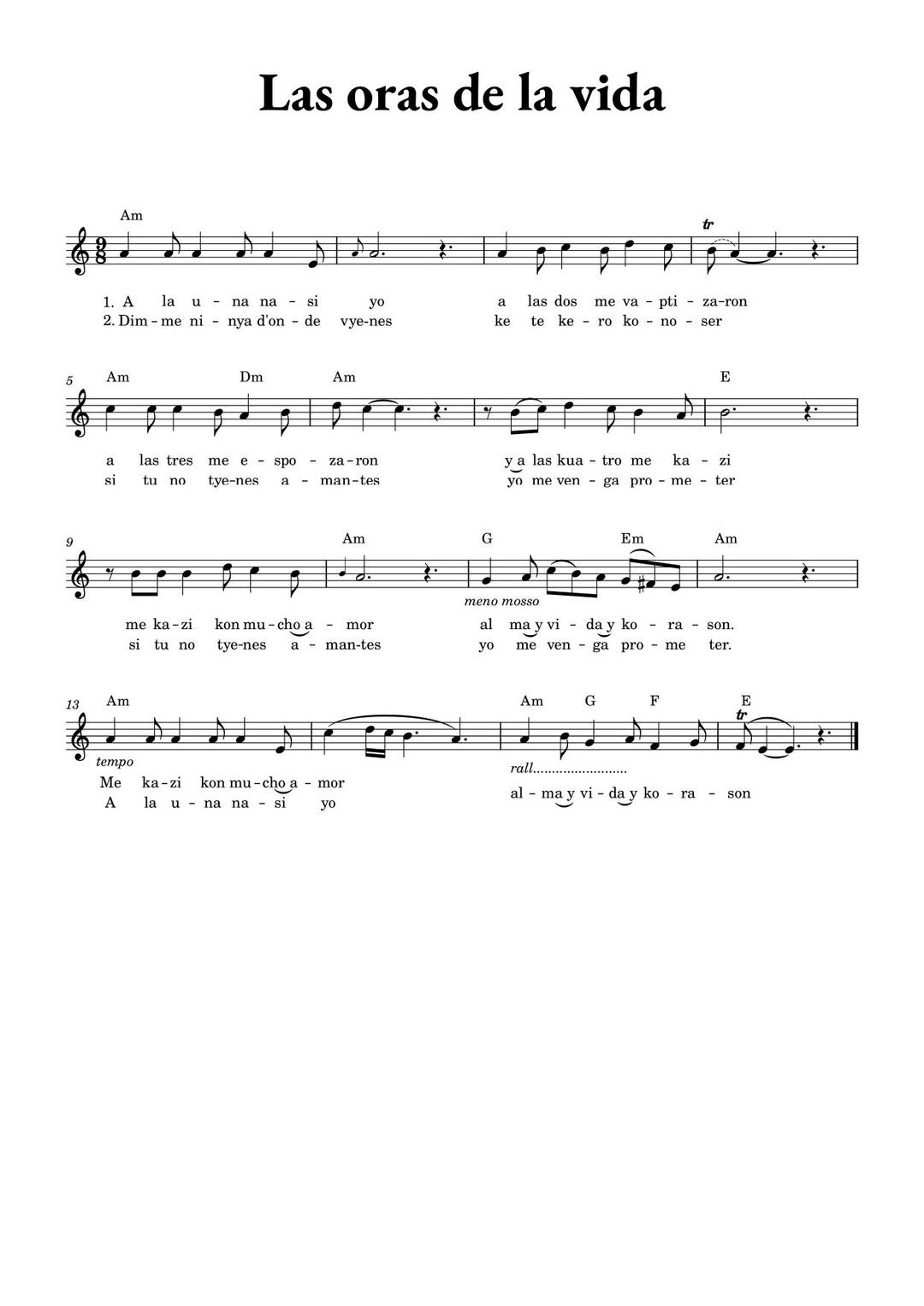
Note on the lead sheet The lead sheet was created based on the version from the Flora Molho Archive, as was the syllabification (see version #1). Using this guide, all the other versions may be sung, either exactly as they are or in combination.
Music Guide

 Bibliography
El Trezoro de Kantes de Sefarad. The Maale Adumim Institute for the documentation of the Judeo-Spanish language and its culture, folkmasa.org. Hemsi, Alberto. “Las horas de la vida.” In Canciones Sefardi, 227. The Hebrew University of Jerusalem, Jerusalem, 1995. Nar, Albertos. “A la una yo naci.” In Ta tragoudia mas, 54–55. IANOS, Thessaloniki, 2021. Nehama, Joseph. Dictionnaire du Judéo-Espagnol. Consejo Superior de Investigaciones Científicas, Madrid, 1977.
**Research, analysis and translations:**Mariangela Chatzistamatiou **Aural transcriptions and lead heets:**Nikos Panagiotides
Disclaimer: The content on this website is protected by copyright. Use of the content is allowed for personal or educational purposes only with clear citation of the source. Republishing, modifying, or using the content for commercial purposes is prohibited without prior explicit permission.

