







Yo so venida de Brusa
Alternative Title: “La kondenada del Pasha”, “Sentenciado del bajá”, “Kautivo del renegado”
Description
This is a rare ballad that preserves the traditional single-rhyme structure typical of the genre. The exact date of the song remains unknown; however, judging from the style of its performance in the two historical recordings that survive, as well as the simplicity of its melodic line and its low tessitura, it most likely dates to the late 19th century. The heroine arrives from the city of Bursa and settles in the Galata district of Constantinople, where a pasha sees her and wishes to abduct her. She is put on trial, judged, and her fate is decided. She turns to her elderly mother, asking her to save her or to pay her ransom, but her mother is unable to help her.
According to the folklorist and writer Aristomenis Kalyviotis, the song was recorded in Greece by Mlle Mariette in 1911. There is also a recording by the researcher Moshe Attias (1898–1973), available on the website of the National Library of Israel, which is believed to have been made in the 1960s.
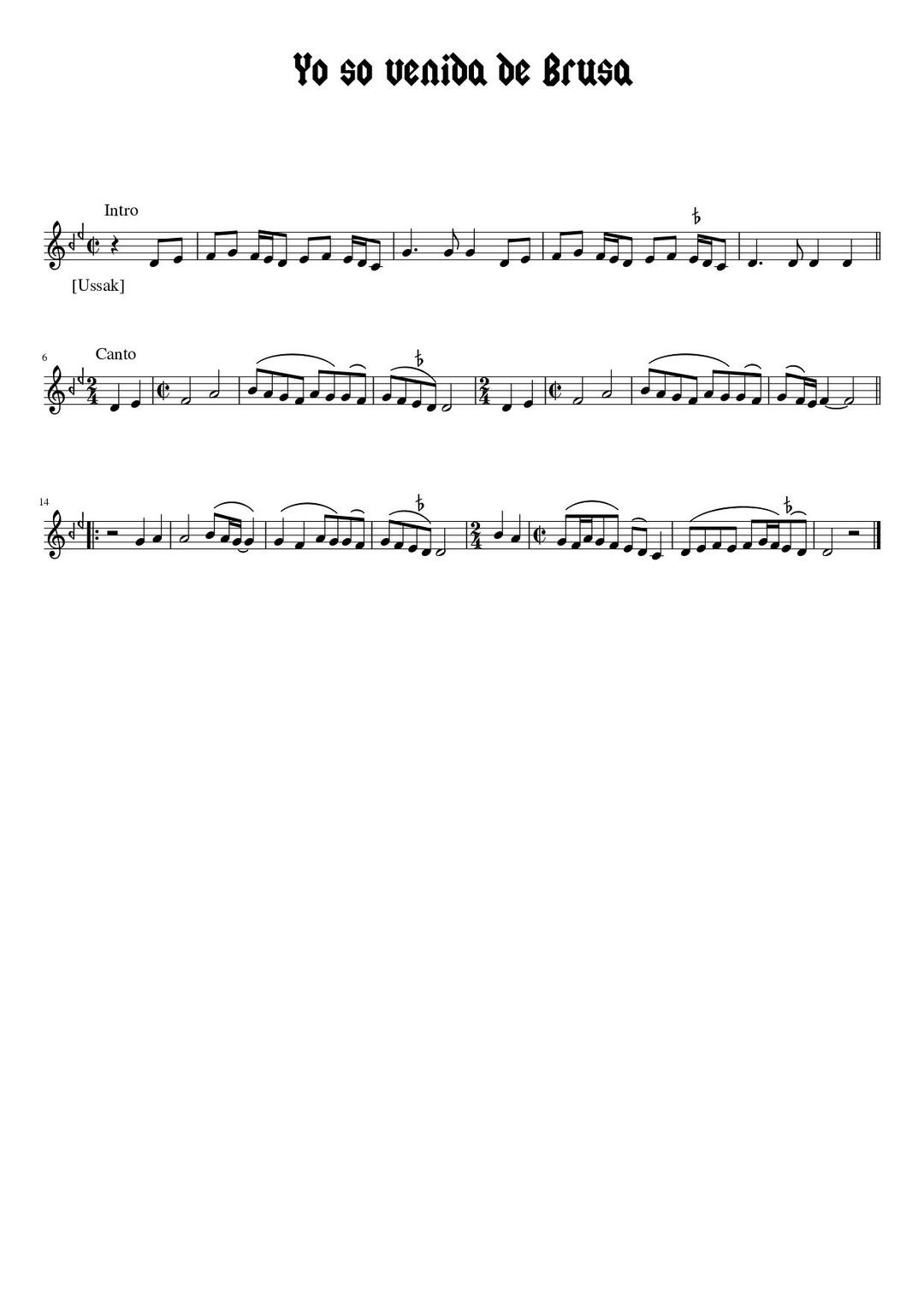
Below is the version preserved by Moshe Attias, which was also recorded by Mariangela Chatzistamatiou as part of the research program of the Jewish Museum of Thessaloniki, Unknown Musical Treasures of the Greek Jews.
Τραγουδάει η Μαριάντζελα Χατζησταματίου με το συγκρότημα Pellegrinaggio al levante Ensemble. https://www.youtube.com/watchv=8AyC3qTBnj0&pp=ygUVeW8gc28gdmVuaWRhIGRlIGJydXNh
Version 1
Yo so venida de Brusa
Alternative Title: “La kondenada del Pasha”, “Sentenciado del bajá”, “Kautivo del renegado”
Lyrics
Yo so venida de Brusa /jo so veˈniða de ˈbɾusa/ I have come from Bursa
el pasha turko me vido. /el ˈpaʃa ˈtuɾko me ˈviðo/ the Turkish pasha saw me
Dia de Lunes de manyana /ˈdia de ˈlunes de maˈɲana/ On a Monday morning
djuzgos negros me djuzgaron. /ˈdʒuzɡos ˈneɣɾos me dʒuzɡaˈɾon/ harsh judgments were passed upon me
Dia de Martes de manyana /ˈdia de ˈmaɾtes de maˈɲana/ On a Tuesday morning
kon un keman en la mano. /kon un keˈman en la ˈmano/ with a violin in my hand
Una madre vieja tengo, /ˈuna ˈmaðɾe ˈvjeʒa ˈteŋɡo/ I have an old mother
madre mia, mi kerida. /ˈmaðɾe ˈmia mi keˈɾiða/ my beloved mother
Ija mia mi kerida, /ˈiʒa ˈmia mi keˈɾiða/ my beloved daughter
ni kon malas ni kon byenes, /ni kon ˈmalas ni kon ˈbjenes/ neither through hardship nor through ease
apozi en Balata /apoˈzi en baˈlaˈta/ I stopped in Balata
kon el me keria yevar. /kon el me keˈɾia ʝeˈvaɾ/ and he wanted to take me with him
El djuzgo ya me salyo /el ˈdʒuzɡo ja me salˈjo/ another sentence was passed on me
non los puede deportar. /non los ˈpueðe depoɾˈtaɾ/ I could not escape them
Otro djuzgo me salyo, /ˈotɾo ˈdʒuzɡo me salˈjo/ yet another sentence followed
dos delante, dos detras. /dos deˈlante dos deˈtɾas/ two ahead and two behind
La ire a saludar /la iˈɾe a saluˈðaɾ/ I went to bid her farewell
eskapame de este hal. /esˈkapame de ˈeste hal/ to escape from this misery
no te puedo eskapar, /no te ˈpweðo eskaˈpaɾ/ I cannot help you escape
al goral te vo echar. /al ɡoˈɾal te vo eˈtʃaɾ/ I will leave you to fate
Music Guide

 Bibliography
Attias, Moshe. Moshe Attias. “Λαντίνο τραγούδια στα Ισπανοεβραϊκά.” Nli.org.il, 2019, www.nli.org.il/en/items/NNL_MUSIC_AL990034324470205171/NLI. Τελευταία πρόσβαση 21 Φεβ. 2024.
Καλυβιώτης, Αριστομένης. Θεσσαλονίκη, η μουσική ζωή πριν το 1912: η διασκέδαση, τα μουσικά καταστήματα, οι ηχογραφήσεις δίσκων. Καρδίτσα, Α. Καλυβιώτης, 2015, Σελ. 117-118.
Scarlatos, Chryssie. “The Evolution of the Jewish Music Tradition in Greece.” Jewish Museum of Thessaloniki, June 2022. https://drive.google.com/file/d/17xlWY2t5AfWpVrL8Qqx22A8ynkA6LuSO/view?pli=1
Research, analysis, translations and IPA transcriptions: Mariangela Chatzistamatiou Aural transcriptions and lead sheets: Nikos Panagiotides
Disclaimer: The content on this website is protected by copyright. Use of the content is allowed for personal or educational purposes only with clear citation of the source. Republishing, modifying, or using the content for commercial purposes is prohibited without prior explicit permission.

